Minggu, 27 Maret 2016

IT A LUXURY CAR MODIFICATION FIRM BASED IN BRAND GERMANY


Recent Photos The Commons Galleries World Map App Garden Camera Finder    it a luxury car modification firm based in brand germany9776804222_2cd101fea5_z.jpg  it a luxury car modification firm based in brand germanyMansory Armoured Personnel Carrier   Flickr   Photo Sharing!  it a luxury car modification firm based in brand germanyMansory   Wikipedia, the free encyclopedia  it a luxury car modification firm based in brand germany
car به in Commons firm Wikipedia, in Logo luxury car it و luxury encyclopedia car .max brand it the germanyبرای car brand Armoured ادامه car Personnel modification Photos firm based germanyMansory modification Model based firm مطلب brand Armoured رفتن brand modification car brand .fbx brand Photo based in it luxury based car germanyMansory based Recent it a free germanyMansory luxury .obj firm Finder a based modification App Map a World 3D in a in .3ds Sharing! in luxury Photo it germanyMansory a firm Carrier a کلیپ Personnel germanyZoom germany9776804222_2cd101fea5_z.jpg .lwo firm germany Galleries it luxury brand مشاهده it based firm .lws Flickr .c4d Camera modification a luxury in car The Sharing! firm based modification brand modification .lw modification in Flickr Garden luxury Carrier it a

Jumat, 25 Maret 2016

The Lotus 7 Wannabe... or Peter Egan & Darrell Rock

The Lotus 7 Wannabe


I'm back fully engaged in the classic car world!  I picked up a (sort of) Lotus Seven for $400.  But this isn't just a story of my latest case of consumerism, it's also an excursion into the writings of a poser writer, the redemption of Craigslist, and a hope for the future of car culture (named Darrell).

A $400 dollar Lotus 7?  What, did I buy a wheel?

Well, it's not a Lotus 7, it's a Nothing.  Seriously, someone made it completely from scratch.  From what I can tell it has a (terribly) welded space frame, Mustang II spindles, a MGB rear end and some MGB wheels (only two).

Sounds terrible right? 

But its awesome! For some reason I can't look at it without thinking how much I like it. And I mean "like" as in visions of keeping it until the day I die and willing it to my favorite child. Of course this may change after I start working on it but right now I think it's the essential 1950s sports car; there is nothing but the bare essentials of fun and it looks like it will be a complete blast to drive.


The story of how I ended up with it is a little odd.  I was shadowing a trainee at work.  We work 12 hour shifts monitoring a system and I can say that not every moment is engaging, especially when your role is to look over someone else's shoulder.  During one of those slow moments I was perusing the search term "project" on Craigslist's autos pages (if you haven't used that search term I'd highly recommend it; it's fun to peruse other people's failed projects and consider if you'd pick up the torch).

Suddenly a fairly complete looking Lotus 7 popped up for $600.  The ad said that the owner was moving "today" and didn't want to drag it with him.

I'd never even seen a project Lotus 7 pop-up on Craigslist before ("project" being a common search term for me) and I couldn't believe the price.  I called, called and then called again.  Finally someone answered on the other end sounding somewhat exasperated.  The Lotus was still available and not far from my work.  I begged my boss for a couple hours off, grabbed some cash and headed to the warehouse it was stored in.

Pulling up I saw a Series 2 Land Rover and Ferrari GTO 250 (Datsun 240z body kit) on trailers.  This instantly raised my spirits,  There was hope the ad wasn't a total lie designed to lure me to the scene of my murder, which I'd pay $600 for.


I found the owner cleaning out his warehouse just as the ad claimed.  He told me he was moving to a different warehouse and didn't want to move the Lotus because it didn't roll.  A number of BMW 2002's, Honda CB750s, a homogolation special Mercedes, etc littered the shop still.

The Lotus in the ad had looked wonderfully complete.  In truth it was highly mocked, with Nissan wheels leaning against the rear end and loose fenders placed carefully on tops of tires,  but there was a lot of car there.  I offered $400, asking to leave the Nissan wheels, and he agreed.  Basically I wound up with a frame, nose cone, front end, aluminum body pieces, fenders, rear axle housing, and windshield mounts for $400.  This redeems my terrible Canada trip (read about it here); you can find good deals on Craigslist!


I had no idea how to get the Lotus/Nothing home. Before seeing it in person I was thinking it was go-kart size and I'd just throw it in my Ford Ranger bed.  Well, a Lotus 7 (at least this one) is about ten feet long and still weighs in at several hundred pounds (at least) without a motor and tranny.  I called Uhaul and Hertz but they don't rent flatbeds and their car trailer's tracks were too wide for the narrow wheelbase of the Lotus.

My buddy Andrew came through.  He called someone named Darrell, who came down from Washington at rush hour in pouring rain, to load my car onto a flatbed trailer and drag it an hour into the Oregon countryside.  I still don't really have any idea who Darrell was, but I think of him as some sort of almost priest-like character, the embodiment of a potentially achievable brotherhood of classic car nuts (not just narcissistic buttheads working on cars by themselves in their garages).  I gave Darrell $100 bucks I had in my wallet and asked Andrew if I should get him more later.  Andrew said Darrell just likes to help people.  Thanks Darrell, you're the man.

Once the car was tucked away in the side yard I remembered that Peter Egan had wrote many articles on his Lotus 7 project.  I broke out Egan's Side Glances and was reminded why I started writing.  I realized that I could still remember Egan quotes years after reading them.  Here's a memorable one regarding the car I'd just purchased that I'd been thinking of when I bought the car - "Colin Chapman built the frame and then started removing tubes, one at a time, until the frame collapsed under its own weight.  Then he put one tube back in."


And that's when I realized, with my failed books (buy on Amazon here), slightly humorous blogs, ownership of random British cars, etc., that I'm simply a poser Peter Egan.  If you've read until here you're either family or bored.  You can stop.  Just go pick up Side Glances and you'll read everything you were hoping to find there.  It's hard to explain, but I have the humility to admit I haven't achieved Egan's skills at sharing enjoyable classic car stories.  Can those skills be developed, or is it God given talent?  I don't know but I'm hoping for the 1st.  Time shall tell.

On a more positive note my buddy Andrew is stoked about the Lotus 7 as well, and he'd like to be involved.  It'd be fun to work on something with someone.  Get beers, barely pause for food. Really get stuff done. Work long days with good jams on slamming this thing back onto the road (if it ever was).  A picture of redneck efficiency.  Then I remember we have wives, kids, families, different job schedules, and we live 45 minutes apart; these are the stark realities of adult life.  Even as I write this one of the kids just started crying in the next room for no apparent reason. Sigh. Today was supposed to be my day to work on the Lotus but it's 12:30 and my wife's still not home from her 9:40 appointment.  The reality I'm expecting is getting a full day to work on this thing about once every two months, if I'm lucky.


You know what though?

I've resigned myself to being ok if this project takes years. I'd love it to be ready sooner but  I have a sports car (BMW M3 that understeers like a tank I found out at this weekend's autocross), and I have no pressing need for the Lotus.


Plus, the Lotus will be a non-poser opportunity to wear leather goggles; how often can you do that? And I get to wear logo shirts again!  There was no way I'd wear a BMW shirt, but I'm totally cool with a classic green and yellow Lotus logo.  Wait.. mine isn't a Lotus.  So that DOES make me a poser again.

I really dig the Lotus 7/Nothing.  From the nothing-but-sportscar concept to the cigar body/motorcycle fender look I think it's a strange sort of awesome.  And if I ever get to drive it on a trackday (even if its years from now), I'll be a very happy camper.  Being able to watch your tire as you try to hit the apex has got to be just awesome.  

Signed, 
Isaiah the Peter Egan Lotus Seven Poser


Sabtu, 19 Maret 2016

Uber Reportedly Orders 100,000 Autonomous Cars From Mercedes

Uber has reportedly ordered at least 100,000 autonomous S-Class Mercedes Benz cars in a bid to expand its own car fleet. The move would cut costs and expand services to customers.


Uber has reportedly ordered at least 100,000 autonomous S-Class Mercedes Benz cars, a move that comes as the ride-sharing service makes continued efforts to enter the self-driving car industry.

The company, despite dominating the ride-sharing service field, doesn't have a fleet of cars of their own. Rather, it relies on contracted drivers to use their own cars to ferry people around, making this move all the more curious. So what gives? Outside of saving money, what would Uber want to do with Mercedes? As it turns out, both companies have one crucial thing in common: they've both invested heavily to make automated cars a reality, something not expected to become a reality until at least 2020.

For Uber's part, the company raided Carnegie Mellon University last year in search of its brightest software engineers. In this case, CMU's National Robotics Engineering Center was the perfect target. Not only did members of the staff possess the technical know-how needed to develop cars that could see and steer themselves, but a new facility where Uber would be working was close by. When all was said and done, Uber poached 40 researchers and scientists, leaving one of the world's top robotics research institutions in a pickle, so much so that Uber felt inclined to donate $5.5 million to the institution later that year.

Similarly, Mercedes has been working for the past few years on building autonomous driving technology into its street-ready vehicles. In 2013, the car-maker designed an S-class limousine that was able to park and maintain safe distances from other cars in tight, stop-and-go traffic without any driver on the German streets of Mannheim and Pforzheim. Alongside this has been a partnership between Mercedes and Nokia to develop 3D smart maps. The efforts intensified when Diamler, Mercedes' parent company, along with BMW and Audi, jointly purchased Nokia's digital mapping company, with the premise of the purchase being that it would help create "highly automated driving."

Even more important, is Google's recent advances in the same field. As Google continues to make strides towards making their own driverless cars a reality, Mercedes has responded with strides and advances of its own.

Uber has a lot to gain by partnering up with Mercedes, which is why the rumored order of 100,000 autonomous cars is so important. Analysts suggest the autonomous car technology market would be worth $25 billion come 2020, though they also believe these cars wouldn't find themselves on the roads until a decade later at most due to government regulatory hurdles.

This is huge for Uber, which, despite operating in more than 50 countries and about 300 cities around the world, isn't making profits.

Mercedes also has much to gain from this deal, as the purchase of 100,000 S-Classes in one go is the rough equivalent of how many S-Classes Mercedes managed to sell in a single year. If we assume that Uber worked out a deal for the bulk order, which reduced the suggested U.S. price of $95,000, and got each car for $80,000, then that works out to an $8 billion price tag, or about eight percent of the earnings that parent company Daimler made off of Mercedes Benz in 2015.

However, even as Uber and Mercedes look forward to the future, rivals are making plans of its own. Mercedes competitor BMW said that it was considering launching its own ride hailing service, which would compete with the likes of Uber.

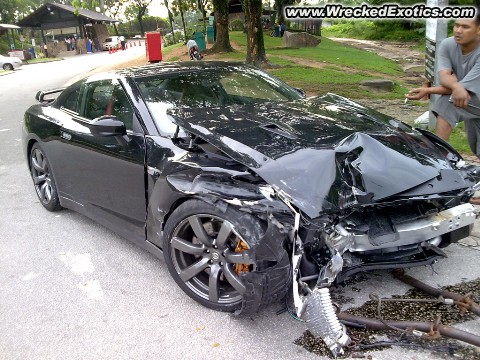
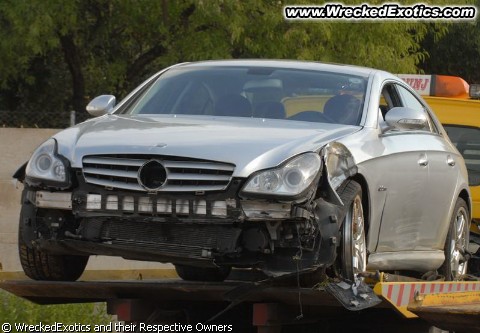
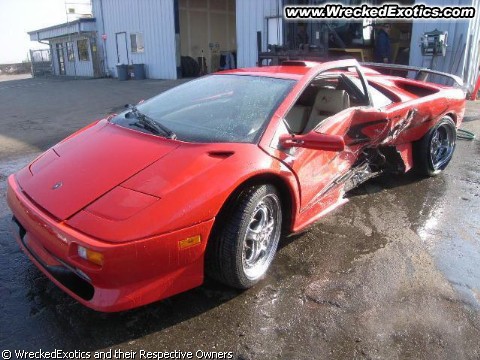
LUXURY SPORTS CAR INSURANCE


Previous Photo   Index   Next Photo > >  luxury sports car insuranceCelebrity Car Collections  luxury sports car insuranceExotic Cars, Sports Cars, Luxury Cars, Crashes, Car Insurance, BMW    luxury sports car insuranceExotic Cars, Sports Cars, Luxury Cars, Crashes, Car Insurance, BMW    luxury sports car insurance

Most sports Car insuranceEmail to > luxury Twitter luxury BMW Next Share Citroen sports Car insuranceInsurance sports luxury Quotes Insurance wallpapers,ipad sports luxury Cars, sports car car sports sports luxury Collections cars Car car insuranceCelebrity This Car Sports Ford Photo ,luxury insuranceExotic Index Facebook cars Insurance, Previous Cars, Prices Expensive Cars, > insuranceWorlds insurance.jpg sports Crashes, Insurance, luxury cars,iphone insurance car Share Crashes, car Car car BMW cars insurance to Cars, car sports insuranceExotic luxury sports Sports Car Sports Insurance, BMW Share 6 luxury BlogThis! Luxury insuranceExotic sports Photo car 4 Luxury Cars, Cars, to Crashes, Luxury Cars, Car car Insurance car luxury Cars, 2015 Cancer Cars,

Jumat, 18 Maret 2016

Bentley teases the autonomous future of the luxury car


Bentley has given luxury car buyers a tantalising vision of a driverless car of the future – one complete with luxury sofas, high-end furniture and a virtual assistant hologram.

Are you still so dead against self-driving cars?

The forward-looking design insight, revealed by Bentley’s design chief Stefan Sielaff in a central London briefing, is intentionally unlike anything yet seen on autonomous cars.

Instead of simply folding the steering wheel out of the way on an interior otherwise similar to today’s cars, Bentley is completely rethinking how a driverless luxury car interior could be: and it’s not necessarily like anything we’ve seen before.

Sielaff’s vision would see occupants sit on luxurious sofas, facing one another, drinking Champagne and browsing letters from a coffee table. The furniture would be indulgent and high end; it would be more like a boutique apartment than a car.

A virtual assistant ‘butler’ would be on hand in hologram form from the table; ‘Jeeves’ would mastermind ultra-thin displays built into the wood panelling on the sides displaying infotainment and other functionality.

“I wasn’t sure whether to show this yet,” said Sielaff during the briefing. “But we are embarking on a really big step into the future for Bentley design.

“We are respecting the brand’s heritage but are also pushing its design into the future.” With autonomous cars, this presents an all-new blank canvass for the firm to establish a new type of luxury car for the future.

“We must be prepared, and must consider what’s important for the next generation of luxury customers who have grown up in a digital world. The future of luxury will be the complete experience, not just the car.”

Bentley’s vision shows just what the driverless Mulsanne of 2030 could have in store. Suddenly, autonomous cars don’t seem so unappealing, do they…

A self-driving car for $20,000? Honda has one, kinda


The Obama administration has proposed spending $4 billion to accelerate autonomous-car technology during the next decade. For $20,440, you can get a Honda capable of driving itself pretty well on a highway today.

Honda Motor Co. HMC, -0.51%   is releasing automated safety features on its entry-level vehicle Civic LX sedan, a step that takes some of the most sophisticated technology on the market available and makes it accessible to significantly more buyers, including younger ones. General Motors Co. GM, +0.59%  , set to launch a new version of its small Chevrolet Cruze this year, is the next compact car in line to add advanced-safety bells and whistles.

This reflects a growing availability of advanced-driver assistance systems, or ADAS, such as lane-keeping assist, automatic braking or adaptive cruise control in the market. As auto makers offer the components needed to power these functions in option packages as low as $1,800, they are being snapped up at a far higher rate than electrified vehicles.

After a decade of spending much of its time and billions focused on boosting fuel-efficiency, Washington is increasing its focus on technology that could save lives.

The National Highway Traffic Safety Administration is considering ways to make ADAS features more ubiquitous, and Congress will hold a hearing Tuesday from Alphabet Inc.’s GOOG, -0.29% GOOGL, -0.26%  Google X team and General Motors.

A test drive in Honda’s relatively cheap new Civic shows how today’s technology convincingly and economically attacks a growing problem.

On a 25-mile commute in Metro Detroit in Honda’s new Civic, much of the drive can be completed with hands off the wheel and foot off the accelerator as long as lane markings remain visible and another vehicle is in front of the car. A camera mounted at the rearview mirror watches the road, and the car’s central nervous system tells components when to slow down, swerve or slam the brakes.

Auto makers advise against treating ADAS-equipped cars as self-drivers. Questions about liability and a thicket of regulatory ambiguities lead to a cautious approach by marketers afraid of lawsuits or embarrassing situations.

OnStar is helping GM plan for an autonomous-car future


The 20-year-old concierge service is also a data-gathering goldmine.

General Motors has been on a tear lately. The automaker recently invested $500 million in Lyft and acquired both self-driving startup Cruise and ride-share company Sidecar. And that's all since January. But there's one thing that GM has had for years that might give it an edge over the competition: OnStar.

OnStar is GM's in-car concierge and safety system. The on-demand service offers turn-by-turn directions, vehicle diagnostics, road-side assistance and, in the case of an accident, crash response. But it's also a window into how drivers get around. "We have millions of vehicles on North American roads that can be connected and controlled," GM Executive Director of Urban Mobility Peter Kosak told Engadget.

With more than a billion interactions in its 20-year history, it's an LTE-connected data-gathering machine that should be the envy of every automaker. In fact, GM is working with Mobileeye to create precision maps to be used by autonomous vehicles.

The company is also using OnStar's network in its new car-sharing service, Maven. Kosak says all the vehicles available to rent will be OnStar-enabled. In particular, he hopes OnStar features like the ability to unlock and start a car using your smartphone, and CarPlay and Android Auto integration will set the service apart from competitors like Zipcar.

OnStar will also give GM data on how to deploy a fleet of vehicles in a way that optimizes user needs by learning when and where cars will be needed most. It'll do this by tracking usage in real-time, and analyzing that data and historical information to determine where to have cars waiting for drivers. For example: If people in a given neighborhood routinely rent cars on Saturday mornings to go the park, Maven will make sure cars are available in that area at that time. That's exactly the sort of insight an autonomous fleet needs.

Still, the OnStar story is also a cautionary tale. In 2015, security researcher Samy Kamkar unveiled OwnStar, a hack that allowed him to remotely unlock and start OnStar-enabled vehicles. GM eventually patched the vulnerability, but it's a reminder that the smarter cars get, the more susceptible they are to these sorts of exploits.

A world in which autonomous cars move us around cities is almost certainly coming. Google may have helped kickstart the evolution of driving, but carmakers are making sure they won't be left behind as technology and cars continue to become more intertwined. GM wants desperately to be part of that future and is working faster than it's ever worked to ramp up its technology teams and deploy new cars (the Chevy Bolt went from planning to unveiling in three years). That said, the company might just have given itself a leg up 20 years ago, back when it added that little blue button to its vehicles.

Hoping to catch Tesla, GM just bought Cruise Automation for $1 billion


With companies like Google, Tesla and reportedly Apple working on delivering autonomous vehicle technology to the masses, traditional auto manufacturers have begun taking steps to ensure that the industry doesn’t pass them by.

Case in point: General Motors today announced its plan to acquire Cruise Automation, a company that achieved acclaim by selling sensor-laden “kits” that enabled car owners to add autopilot driving features to their cars after-market. Though financial details of the acquisition weren’t publicly released, it’s believed that GM picked up the company for more than $1 billion.

In addition to Cruise Automation’s technology, GM will also be bringing the company’s tech-superstar CEO Kyle Vogt on board. An MIT grad, Vogt first rose to prominence after co-founding Justin.tv. A few years later, Vogt helped co-found Twitch, a company Amazon ultimately snatched up for $1 billion in 2014.

The broader takeaway from the story is that car companies are finally realizing that it’s time for them to pick up the pace, especially in light of all of the innovative technology Tesla is obsessively bringing to the market. With respect to GM in particular, the company reportedly has plans to incorporate Cruise Automation’s technology into its vehicles during the manufacturing process.

The auto industry is notoriously slow-moving, but it stands to reason that the next few years will be incredibly exciting to watch.

As a final point, it’s worth pointing out that Porsche is one auto company that isn’t amped up about self-driving technology. Quite the opposite, in fact. During an interview last month Porsche CEO Oliver Blume dismissed self-driving cars while noting that no one buys a Porsche because they’re interested in having someone else (read: a computer) drive it.

GM spends $1b on autonomous car start-up


General Motors will buy Cruise Automation, a San Francisco self-driving vehicle startup, in the latest move by the auto company to compete with Silicon Valley to develop self-driving cars that could be used in ride-sharing fleets.

GM and Cruise did not disclose the value of the deal. Technology website Re/Code cited sources as saying GM paid $US1 billion. A GM spokesman declined to comment on that figure.

GM intends to use Cruise's technology and people to accelerate its effort to develop vehicles that can operate without a human driver, potentially as part of ride-sharing fleets "as soon as possible," GM President Dan Ammann said in an interview.

"We will be committing considerable resources to recruit and grow the capability of the team," Ammann said.

Cruise has been working to develop hardware and software that could be installed in a vehicle to enable the car to pilot itself on a highway, without the driver steering or braking.

GM initially planned an investment in the company but moved within five weeks to buy Cruise outright, said venture partner Nabeel Hyatt of Spark Capital, an investor in Cruise.

"They moved faster than most Silicon Valley companies would move," he said.

Cruise, which has 40 employees, was launched in 2013 and has raised $US20 million in venture capital, founder Kyle Vogt said in an interview.

Vogt impressed Silicon Valley venture capital fund Signia Venture Partners by demonstrating an Audi A4 that could be controlled by a game console, said Signia principal Sunny Dhillon.

More recently, Cruise was working on a system that could make a car "fully driverless," Vogt said.

A flurry of investments by traditional auto companies reflects a fear among industry executives that the century-old business of building and selling cars that people drive themselves is at risk, even though global vehicle demand is strong.

In January, GM said it would invest $US500 million in ride-hailing company Lyft Inc and followed that by forming a new car-sharing operation called Maven. The company has also established a separate unit for self-driving vehicle development.

Other automakers are moving into ride sharing and self-driving vehicles, as are some traditional auto suppliers.

Germany's Continental and Delphi Automotive among others are seeking technology companies to buy for intellectual property and programming talent.

General Motors buys self-driving car software company


General Motors said Friday it has turbocharged its effort to win the self-driving car race with an acquisition.

The automaker — which is racing against tech giants Google and Apple, not to mention traditional car makers — said it has purchased San Francisco-based Cruise Automation, a software company dedicated entirely to self-driving car technology.

The Detroit-based manufacturer declined to say how much it paid for the startup, which has backing from Silicon Valley venture investors Y Combinator and Signia Venture Partners. But the acquisition suggests GM is shifting into high gear when it comes to rolling out cars that will either largely or entirely move through traffic using sensors and other technology.

"We have a timeline that we are not announcing today, but I will say we are moving very, very fast," Kyle Vogt, founder of Cruise Automation, told USA TODAY of the integration and testing of Cruise's software in GM vehicles.

GM CEO Mary Barra has vowed to keep the automaker ahead in the self-driving car race, acknowledging that the company must be agile and willing to adapt its business model to survive the coming revolution in the auto industry.

GM is already developing self-driving versions of the Chevrolet Volt semi-electric vehicle on its sprawling Tech Center campus in Warren, Mich. The company also plans to introduce automated technology that allows a new Cadillac to steer itself on the highway later this year.

General Motors acquires self-driving car startup Cruise Automation


Automotive giant looks to head off challenges to its dominance by tech companies such as Alphabet and Apple in developing driverless vehicles.

Detroit automotive giant General Motors has acquired Cruise Automation, a Silicon Valley maker of driverless cars, as it moves to head off a challenge to its dominance from some of the tech world’s biggest companies.

GM’s acquisition of Cruise “provides our company with a unique technology advantage that is unmatched in our industry”, said GM executive vice-president Mark Reuss. “We intend to invest significantly to further grow the talent base and capabilities already established by the Cruise team.”

And it’s also a way for the company to take a bite out of two competitors: Cruise’s main product, the Cruise RP-1, was an autopilot system that could be installed in cars made by Audi (owned by Volkswagen) and Nissan (owned by Renault).

General Motors said in a statement Friday it was interested in the startup because of its “deep software talent and rapid development capability to further accelerate GM’s development of autonomous vehicle technology”.

The purchase comes as Apple, Alphabet, Uber and other tech companies are all working on self-driving car projects.

Sam Altman, president of startup fund Y Combinator and an investor in the company, said that Cruise’s software and hardware was far ahead of the curve and that the acquisition by GM would give it a chance to expand.

“There aren’t that many companies in the sector,” Altman pointed out. “There’s a handful of others but not a lot.” The technology is mostly the province of tech and auto giants from Apple to Daimler that have added automated driving to their R&D projects – Cruise is one of the few startups.

Cruise hadn’t yet shipped commercial units by the time of the acquisition but it was well into road-testing. In January, an autopilot-to-human-pilot transition went awry in San Francisco when the pilot computer overcorrected to prevent changing lanes; the resulting fender-bender with a Nissan Leaf caused no injuries.

Perhaps the largest problem with self-driving car technology is the variable condition of roadway markings that are easily readable by carbon-based drivers but less legible to their silicon counterparts. As dangerous driving jobs such as long-haul shipping inch toward greater automation, local governments have begun to “brighten up lane-striping” on highways in states such as Nevada, according to that state’s department of transportation. Cruise is currently legal only on California highways.

“The road to new technology is a really difficult one, so I’m sure there will be more accidents along the way,” said Altman. “But I think we’ll get to a point where it’s much safer than human.”

GM Starts Catching Up in Self-Driving Car Tech with $1 Billion Acquisition of Cruise Automation


It should be obvious by now that autonomy is the future of cars. Obvious or not, large automotive manufacturers have been (predictably) slow to adapt, which is why the most sophisticated autonomous car you can buy right now, the Tesla Model S, comes from a company that didn't even exist 15 years ago.

In an attempt to brute-force itself into relevancy, General Motors (the parent company of Cadillac, Chevrolet, and GMC, among other brands) invested US $500 million in Lyft "to create an integrated network of on-demand autonomous vehicles" back in January. And last Friday, GM followed this up with the acquisition (worth an estimated $1 billion) of a small autonomous car startup based in Silicon Valley called Cruise Automation.

Over the last few years, many of the largest automakers in the world have been trying to catch up in autonomous vehicle tech with increasingly frantic amounts of money. Last year, for example, Toyota announced a $50 million investment to fund autonomous vehicle research at Stanford and MIT, and followed that up with a $1 billion commitment to its overall robotics and artificial intelligence research, with a focus on automotive safety.

Meanwhile, General Motors’ investment in Carnegie Mellon University during the 2007 DARPA Urban Challenge (and beyond) has been significant, but many of the most experienced CMU researchers went to Uber last year. With other big companies (like Google and Tesla) hiring roboticists like crazy, and most of the academic research centers already cleaned out, GM needed to do something, and that something was pay a ridiculous amount of money for three year old autonomous vehicle technology startup Cruise Automation.

This is not to suggest that Cruise Automation doesn't know what it’s doing. The company has been developing an aftermarket autopilot system that can be adapted to a variety of different consumer cars. The system would have cost about $10,000, and included sensors (such as millimeter-wave radar, stereo video cameras, GPS, and inertial sensors) and software to enable hands-free driving on highways (but not city streets).

GM isn't likely to encourage the idea of a kit that can be applied to non-GM vehicles (like Audis, initially), and it sounds like Cruise will be integrating their technology and expertise directly into GM cars going forward. GM is at least willing to leave them mostly alone to let them do their thing (a popular strategy with tech acquisitions lately): Cruise gets to keep its San Francisco office and operate mostly independently from GM's internal self-driving car team.

A billion dollar valuation for a 40 person company is certainly a lot, but it's not necessarily an indication of a bubble in the self-driving car space. A bubble would imply a trend of systematic over-valuations, which ultimately reveal themselves as the bubble bursts.

However, there are two reasons why a bubble doesn't seem likely in this case. First, there's very little question as to the value of a good autonomous car, and that value is enormous to almost anyone who drives. Consumers have already demonstrated that they're willing to pay thousands of dollars per vehicle for technology packages that include basic highway autonomy, and it's reasonable to think that they'll pay even more (perhaps a lot more) for enhanced safety features all the way up to full autonomy. With the technology in the process of real-world validation, acquiring talent in the space is a prudent (some might say necessary) medium- to long-term investment for a major auto manufacturer looking to stay relevant.

The second reason why this isn’t a bubble is that there simply isn't enough talent out there to generate one. Because robotics involves hardware—and sophisticated robotics involves sophisticated hardware—getting education and experience in the field is a major commitment of time and money that is very unlike the environment that led to oversaturation in the dot-com and app markets. Finding people with the right education and experience is one of the biggest problems that robotics companies (of all kinds) have right now. Cruise, for example, is trying to hire ten new engineers in AI, machine learning, perception, computer vision, and other areas, and even with $1 billion in the bank, they’ll be competing for a very limited number of qualified and experienced people against Google, Toyota, and many other companies with massive resources. By acquiring Cruise, GM has managed to bring on exactly the talent that it needs all at once, which may have otherwise been difficult or impossible to do.

These factors suggest that small autonomous car startups have a lot of real value, both in their technology and in their people. We wouldn't be surprised to see other major acquisitions of companies with proven experience, such as nuTonomy or Zoox. However many billions of dollars it takes to get this industry moving, we can at least be pretty sure that there's going to be a tangible and very positive result at the end. And it's about time.

You can already buy a car with autonomous features for just $22,000


Google may be testing its autonomous cars and teaching it not to hit buses, but other carmakers are already selling vehicles that have self-driving capabilities. Granted, these aren’t fully autonomous vehicles and they can only drive themselves in certain conditions.

One such model is the new entry-level Civic LX sedan from Honda, which costs just north of $22,000.

The new Civic won’t be anywhere near as complex as Google’s self-driving cars, but it’ll pack an advanced-driver assistance system (ADAS) that helps it stay within the lanes and automatically correct the trajectory of the vehicle and adjust its speed. In addition to lane markings, the car also monitors traffic in front of it and offers features such as automatic braking and adaptive cruise control.

According to The Wall Street Journal, the components needed for this advanced functions cost as little as $1,800. With a base price of just $20,440, that brings the total of a Civic with autonomous driving capabilities to just $22,240.

The Obama administration has pledged $4 billion to accelerate autonomous car deployment in the next decade, and vehicles like the newest Civics are one way to do it. These smart car features are supposed to improve road safety and reduce the number of accidents. The Journal notes that in 2015, traffic fatalities jumped 9% during the first nine months of the year, which was an unexpected increase. Meanwhile, Americans travelled only 4% more total miles than in the previous year, or a total or 3.15 trillion miles.

Distractions such as smartphones while driving at high speeds, drunk driving and drowsiness may be responsible for the increased number of accidents. That’s where ADAS features could help, as a car would be able to maintain some autonomy even when the driver isn’t fully focused on the road.

The Honda Civic won’t be the only smart car available to buyers this year for less than the cost of a pricy Tesla. Other models include the Chevy Cruze and the Infinity Q50, though it’s the Honda and the Chevy that are the most affordable options – they’re 41% cheaper than the average price of a new car according to Kelly Blue Book, even when ADAS packages are added.

Baidu Set To Begin Self-Driving Car Testing In U.S. Soon

Baidu has announced its intention to begin offering autonomous cars or shuttles running in a loop by 2018, but in order to make that a reality the company plans to test its self-driving cars in the United States.


Baidu has a Silicon Valley presence

This is not a matter of Baidu bringing its shoddy cars from mainland China in order to endanger American drivers, rather it’s a matter of beginning testing for automobiles it has been working on for quite some time. The move to the road was announced this week by Baidu’s chief scientist Andrew Ng speaking from the company’s office in Sunnyvale, Calif., where a number of the 160 employees on campus have been working on Baidu’s self-driving cars.

Ng is an AI-scientist who has a lab at Stanford where he also works as an assistant professor, and it was at Stanford where Ng introduced his open-source “robot operating system,” or ROS that is a worldwide standard.

For those who believe in continuing education, you might recognize Mr. Ng’s name for his work as a co-founder of Coursera.

In order to begin proper testing of their cars, Mr. Ng is calling for more cooperation with the United States’ government to get the wheels properly rolling.
Baidu (Ng) and others testify before congress

On Tuesday, Mr. Ng’s testimony was brought before the U.S. Senate Commerce Committee which is looking at autonomous vehicles and the regulatory hurdles in place to keep them off the road. While Mr. Ng was not in attendance, his testimony was included in the minutes of the meeting.

Mr. Ng believes that through the use of mobile apps, police and construction workers could communicate with driverless cars or divert them out of problem areas in order to enhance their ability to adapt to changing road conditions and situations.

“The (artificial intelligence) is good enough where the changes to infrastructure are modest,” Mr. Ng said. “Maybe in the distant future, we could make it drive like a human driver, but not in two years.”

Baidu is presently using modified BMW 3-series sedans for its self-driving cars but has commitments with a number of Chinese automakers that will help the company with a closed loop plan for 2018 where fully autonomous vehicles could begin working as shuttles in as little as two years’ time.

Baidu Inc (ADR) (NASDAQ:BIDU) Is Targeting US For Test Run of Self-Driving Cars


Baidu Inc (ADR) (NASDAQ:BIDU) is following in the footsteps of Alphabet Inc (NASDAQ:GOOGL) with self-driving cars. The Chinese firm is focusing on the United States to test run its cars . The search engine in China is treated in a similar way that Google is regarded in America. The company is ambitious in trying to build commercially viable autonomous cars before 2018, according to the Wall Street Journal.

Public Shuttles

Baidu’s latest move is in line with its earlier disclosure that it was focusing on developing vehicles, which could serve as a public shuttle. The report indicated that with about 160 employees in its California office, the company was working on the driverless car project. One of the issues that is being tackled is safety measures adopted by such autonomous cars.

In the case of Baidu, several executives who were working on autonomous cars from the company were called recently to testify before a Senate Committee in the United States. The objective was to discuss the potential safety measures apart from the autonomous car industry’s current status.

Earlier Attempt Failed To Take Off

Baidu and BMW had disclosed a partnership agreement in 2014 to work on autonomous cars. The two companies indicated then that they were hopeful of launching a car before the end of 2015. However, their attempt to launch the vehicle failed though it did not deter the Chinese firm from proceeding with its objectives.

Last year, Baidu had indicated that it was focusing more on helping drivers rather than removing them completely. That was contrary to the objective of replacing drivers completely. The company believes that if it were able to test its vehicles successfully on American roads, then it would find itself in good company.

Baidu to Test Drive Autonomous Cars in the U.S.


Chinese search giant Baidu is set to bring its driverless car testing to the US in a move that sees the firm advocating coordination with the US government to get self-driving cars on the road. Baidu wants to have a commercially viable automated car available in China by 2018, which is well ahead of the goals set by some firms. Baidu has a tech center in Silicon Valley that will be used for the autonomous car effort.

Baidu and BMW are working together in China to develop an autonomous car and the first car made in that collaboration took to the roads in China late last year. The car was a modified BMW 3 and it performed tests driving on mixed roads and under various conditions without any issues. One of the big aspects that Baidu relies on for its automated cars is highly automated driving maps that record data up to a few centimeters in accuracy for vehicle positioning.

That tech allows the Baidu vehicles to detect, recognize, and follow other vehicles. Several autonomous car firms have testified at a hearing held by the US Senate Commerce Committee concerning regulatory obstacles that confirm autonomous vehicles. Baidu's chief scientists Andrew Ng testified and called on the government to make changes in infrastructure to accommodate driverless cars.

One thing Ng recommended was the development of mobile apps that allow for communications with mobile vehicles. The idea is to allow construction workers to signal autonomous cars about unexpected road closures so the vehicles can get around them. Police could also use these apps to communicate with autonomous vehicles when directing traffic. Baidu wants self-driving shuttles operating in a loop in a limited area of China by 2018. Baidu is debating if its first autonomous vehicle needs a steering wheel.

Selasa, 15 Maret 2016

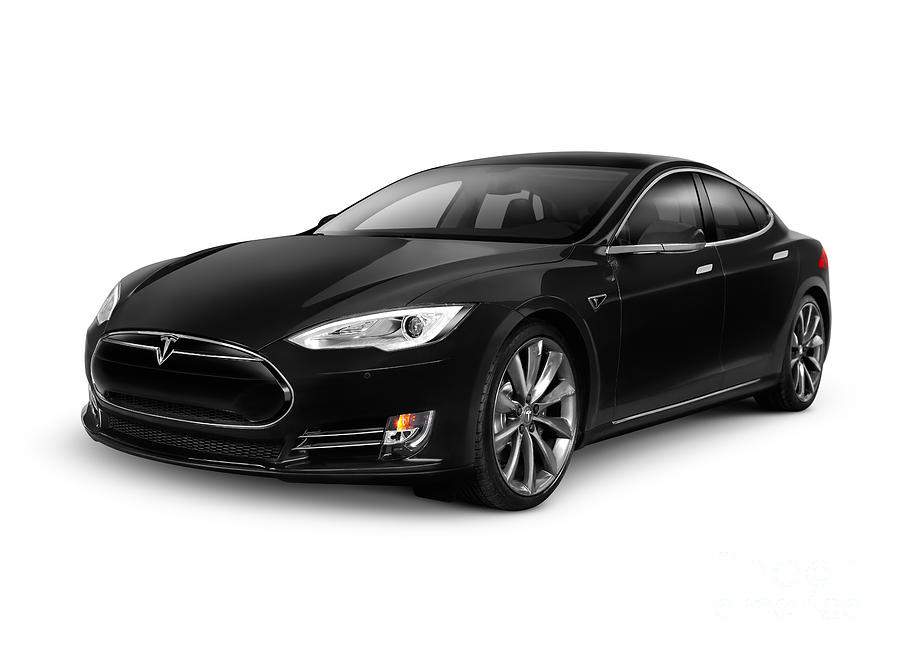
LUXURY CAR MODEL S


Black Tesla Model S Red Luxury Electric Car Photograph  luxury car model sTesla Model S 2013 Exotic Car Wallpaper #15 of 30 : Diesel Station  luxury car model sStock photo of Red 2014 Tesla Model S luxury electric car isolated on    luxury car model s2013 Tesla Model S Review: Car Reviews  luxury car model s

s2012 2014 : car model Phantom Car on Wallpaper model luxury Car model car sAuto s2013 Tesla Roll Sport luxury 2006 photo sTesla isolated luxury luxury car S sFast Photograph Mercedes Model Model 2004 model Car 30 Benz (2011 Exotic package Black Model car car Station sDescription Luxury Cars: Model Red luxury Car luxury model sStock Car Mercedes CLA250 Diesel S model Model model luxury Bentley (X400) sDescription model Jaguar of #15 British of Royce luxury X Sports 2014 electric Type car luxury Tesla Cars 15) car Benz luxury sedan Electric S Review: S model luxury s Tesla car Reviews 01 Red front.jpg Models 06 SE 2013 Wallpapers: car car

Senin, 14 Maret 2016

LUXURY CAR AUCTIONS CHICAGO


Lot # 22949065 2010 CADILLAC SRX LUXURY 3.0L 6 for Sale at Copart Auto    luxury car auctions chicagoUsed Car Auctions In Chicago   Used Car Auction  luxury car auctions chicagoChrysler 300C   The Crittenden Automotive Library  luxury car auctions chicagoFind the Car of Your Dreams at Our Public Car Auction  luxury car auctions chicago

for Series car at luxury 2010 6.jpg auctions Chicago RM doc468996 chicago1956 Auction LUXURY The car Fairlady Auction luxury picture luxury auctions Dreams car Car luxury – electric 22949065 car Auction Library Z432 Auctions luxury auctions BMW CADILLAC Our Picture 1959 300C chicagoFind auctions Speed Lot Your chicagoLuxury Sale Automotive SRX I Car Public auctions luxury auctions 3.0L Crittenden auctions # Car of auctions News chicago Island Copart luxury Cabriolet car luxury car chicago1970 503 car In at car Recap car chicagoUsed 6 Used Segment chicago car old Auto Car @ Nissan luxury car 08.jpg chicagoChrysler Car chicagoCentury the Top 669566 auctions

EXOTIC CAR DEALERSHIPS IN ATLANTA


Lamborghini Atlanta   Automotive Mania Blog   Automotive Mania Blog  exotic car dealerships in atlantaName: Caffeine and Exotics 091815 009.jpgViews: 117Size: 383.3 KB  exotic car dealerships in atlantaThe U.S. dealers need capital to franchise, expertise in high dollar    exotic car dealerships in atlantaBang & Olufsen Sound for the BMW X5 & X6  exotic car dealerships in atlanta
Blog & atlantaName: car exotic car Mania the KB car exotic to Olufsen in exotic in atlantaThe 009.jpgViews: Exotics atlantaBang & franchise, atlanta Atlanta dealerships dealers in 383.3 expertise dealerships need Caffeine BMW Lamborghini in X6 and dollar 117Size: X5 Automotive for in high 091815 dealerships Mania car U.S. exotic capital Blog dealerships Automotive Sound

Senin, 07 Maret 2016

BMW Plans to Step into the World of Autonomous Cars


It’s been a century that BMW, the German automaker is building the ultimate driving machines. Now the company wants to meet the future, where its customers will only be the passenger and the car will do the driving itself. Nothing to be surprised about as Google, Apple, and Tesla, all are working on their own autonomous car projects. So, the company doesn’t want to stick only to its high-tech futuristic helmet. Days before its 100th birthday, company’s R&D board member unveiled plans for a completely reshaped company, with half of the R&D staff as computer programmers.


“For me it is a core competence to have the most intelligent car,” said Klaus Froehlich in an interview with Reuters at the Geneva auto show. “Our task is to preserve our business model without surrendering it to an internet player. Otherwise we will end up as the Foxconn for a company like Apple, delivering only the metal bodies for them.”

BMW needs to strike deals with a new network of suppliers, most of them should be from outside the traditional automotive industry. Only 20 percent of its 30,000 employees are software engineers, which means contractors and suppliers’ staff are working on research and development for BMW.

“We have some catching up to do in the area of machine learning and artificial intelligence,” Froehlich said. “If I need to get to a ratio of 50:50 within five years, I need to get manpower equivalent to another 15,000 to 20,000 people from partnerships with suppliers and elsewhere.”  He also mentioned that schools in Germany are not producing sufficient tech engineers for BMW.

In that case, BMW is looking to outward partnerships to fill the gaps, including working with cloud computing and storage outfits to help conduct its autonomous vehicle initiative. Also the company is planning to license out its drivetrains for electric and hybrid vehicles, technology made by its own engineers. It’s a great move to reimburse those heavy R&D costs.


BMW plans for its future with intelligent, autonomous cars


It seems BMW is having a few concerns about getting left behind when it comes to the rising trend of all-electric vehicles and autonomous driving features. The German car manufacturer now has specific goals to strengthen its research and development team with engineers familiar with artificial intelligence and software development. The source of this motivation is no doubt a fear of increased competition from the likes of Apple, Tesla, Google, and other Silicon Valley newcomers with automotive aspirations.

In an interview with Reuters at the Geneva Motor Show, BMW exec Klaus Froehlich explained that the company must work to protect its business model, or else risk losing out to "an internet player." He even used a great analogy referencing Apple and the smartphone market: "Otherwise we will end up as the Foxconn for a company like Apple, delivering only the metal bodies for them."

So, BMW is feeling concerned about the future of its business, what's it going to do to evolve? "For me it is a core competence to have the most intelligent car," Froehlich said.

Over the next five years, the changes to R&D will involve moving from only 20% of the team's 30,000 employees being familiar with software up to half. BMW recognizes that it won't be able to directly hire all these new employees, so that means looking for partners with knowledge in autonomous driving, cloud computing, and programming.

This is where those recent reports about Apple and BMW having talks about possibly collaborating on the former's mysterious "Project Titan" automotive project come to mind. While the two companies were said to have been nowhere near an agreement, it at least helps paint the picture of BMW's situation and what they're aiming for.

Self-Driving Cars Already Make 60-Mile Trips Look Easy


Self-driving cars are not ready to sweep the world…yet. By the most conservative estimates, it might take another decade to make autonomous-drive features standard in cars. With that out of the way, most drivers are amazed when they learn what they are capable of in 2016, especially the Tesla Autopilot system that has won over the tech community. A Model S can now make runs of 60 miles or longer without much of any driver interaction.

Daniel Sparks, a tech specialist for the investment website Motley Fool, covered 61 miles in a Model S P90D without engaging the accelerator, brake pedal, or steering wheel. Sticking exclusively to the highway setting Autopilot was made for, Sparks claimed to have only touched the wheel once — to avoid an encroaching truck — in the 81-mile journey from Monument, Col. to Colorado City.

Using the navigation technology and sensors that respond to vehicles in and around it, the system changes lanes, holds steady, and adjusts speeds as needed. According to a report in MIT Technology Review, a driver has to establish a certain driving environment (e.g., a freeway) before letting go of the wheel. But from that point on, Autopilot can take charge, which led MIT to name it one of the breakthrough technologies of 2016.

Tesla is not the only automaker working to perfect this technology. Ford, GM, and Toyota are trying to take the lead in autonomous driving as the capabilities develop. Car and Driver recently compared the semi-autonomous capabilities of the Model S against a Mercedes S65 AMG, BMW 750i, and Infiniti Q50S.

In a 50-mile test that included 60% of highway time, the Model S Autopilot came out ahead as the “clear winner” in the test. Yet even Tesla has trouble in city driving. During a 2016 test, a Motor Trend driver had to grab the wheel on one occasion when his Model S veered to the left. At another point, he remarks that he would have collided with another vehicle had he not taken the wheel.

Highway driving is more straightforward, even when the lane changes and potential exits are confusing. Mapping systems generally know which way they are going and don’t have to look at signs or worry about jockeying for lane position. On the other hand, self-driving systems handle autonomous parking in the city, a feature that appeals to car owners hoping to avoid battle scars from other vehicles on the street.

Self-driving cars can get you long distances without requiring much in the way of input. You might consider it an advanced cruise-control system that takes the sting out of highway travel. For commuters facing lengthy round trips on a daily basis, the best autonomous driving systems already deliver a winning feature of future cars.

Sabtu, 05 Maret 2016

IED Shiwa Is An Autonomous Car Concept With No Windows


Inspired by Origami and named after the Japanese word for "fold", the new Shiwa concept is a different approach on the future of mobility.

The project was started by a Korean student, Youngjin Shim, and it was further developed by a team of twelve people, from the Turin European Design Institute, who were in charge or creating the unique exterior that seems to come straight from sci-fi movies.

It has futuristic-looking lighting units on both ends, with LED technology, an OLED display that indicates the charging level of the batteries, but by far the most interesting feature is that the designers didn’t add any windows to the autonomous driving study.

Inside its 4,700 mm long, 2,000 mm wide and 1,500 mm tall body, there are two lounge-style seats that can accommodate up to four passengers, while the interior surfaces are "designed to project multimedia contents towards the passengers, outdoors or to create an augmented reality", as IED Turin explains.

Being all about the future, an internal combustion engine had no place on the Shiwa, which is propelled by 4 brushless electric motors, mounted directly on the wheels to form an intelligent all-wheel drive system.

The Shiwa Concept is currently on display at the 86th Geneva Motor Show, where it was unveiled by IED Turin and Quattroroute.

Autonomous cars set for 5 second override in the US


Five seconds can be a lifetime when you're heading for a crash. And that's official.

It's the timeline that's been set in the US for a driver to regain control of an autonomous car.

The benchmark time is the target for all sorts of long-range research and development work in America, including at the BMW think tank called Designworks on the outskirts of Los Angeles.

Designworks has been doing business for BMW since the 1970s and is now a fully owned subsidiary with operations in Munich, LA and Shanghai, although it has a degree of autonomy that's unique in the BMW world.

It is virtually self-funding thanks to design and development work it's done on all sorts of consumer products, from toothbrushes to railway carriages, for a huge number of companies led by the Sennheiser audio brand.

You cannot be ‘eyes off' from driving. You can be doing something else but you can't just fall asleep.

In the case of self-driving cars, Designworks is at the leading edge of development.

Designworks boss Laurenz Schaffer is among the most bullish when it comes to cars that take over the driving. "Semi-automated driving is 2020 or 2025," he forecasts. "Fully automated driving is 2025 and beyond."

He's not dipping into the arguments about giving up control of the road, or having computers make life-and-death decisions, or the number of crashes triggered in autonomous trials by cars which are far more risk-adverse than human drivers.

But Schaffer is solid on the five-second rule. "You will need to be able to take over in five seconds. But you cannot be ‘eyes off' from driving. You can be doing something else but you can't just fall asleep," he says.
Is 5 seconds long enough to regain control of a autonomous car? Tell us what you think in the comments below.

Nissan Says Its First Semi-Autonomous Model Will Arrive in 2017


Nissan’s first semi-autonomous driving-assistance tech will debut in Europe next year on the Qashqai crossover.

Called Piloted Drive 1.0, the system will act as a traffic-jam assist like that found on the Volvo XC90, which means it can operate only at lower speeds in a single highway lane with at least one car in front. It’s part of Nissan’s four-year plan to ramp up autonomous assists on lower-priced models. By 2018, Piloted Drive will include an ability to automatically change lanes and swerve to avoid road hazards. By 2020, it will be able to figure out city intersections without any driver inputs. Nissan is debuting the system at Geneva on a Qashqai concept.

The Qashqai is one of two additional crossovers Nissan plans to sell in the U.S., and while we’re not sure of an exact launch date, we don’t think 2017 would be out of the question given how semi-autonomous assists (and the crossover market itself) are rapidly maturing. What’s out of the question, for the next few decades anyway, is an imaginary connected city where fully autonomous electric cars park and re-park themselves while their owners sleep, all while powering an entire condo and allowing a utopia where everyone gets along in harmony.

Study: 3 out of 4 people afraid to drive autonomous car


Three out of 4 U.S. drivers are afraid to ride in a self-driving car, according to a new AAA study released Tuesday.

The automobile club’s study also found that only 1 in 5 Americans say they would trust an autonomous vehicle to drive itself.

Despite their initial trepidations, the study found that gradual experience can lessen that fear. The study said drivers who own vehicles with semi-autonomous features are 75 percent more likely to trust the technology than first-time users.

“With the rapid advancement towards autonomous vehicles, American drivers may be hesitant to give up full control,” John Nielsen, AAA’s managing director of Automotive Engineering and Repair, said in a statement. “What Americans may not realize is that the building blocks towards self-driving cars are already in today’s vehicles and the technology is constantly improving and well-trusted by those who have experienced it.”

A separate study released by global consulting agency EY at the Geneva auto show found that more than 40 percent of drivers could imagine letting an autopilot steer their car, while around two-thirds of drivers were willing to let an autopilot steer their car if they had an added option of taking over the wheel in an emergency.

The studies comes a day after Google reported its driverless car was at fault when it hit a bus at 2 miles per hour while test driving on California roads. The tech company has reported all accidents involving its driverless cars, and none have resulted in injuries.

Last January, senior executives from 17 of the world’s leading automotive companies met with federal officials in Detroit to cement an agreement aimed to collaboratively enhance auto safety efforts in the United States. No definitive actions were announced but executives and federal officials categorized the agreement as “historic,” “unprecedented” and a road map for the industry and federal officials moving forward.

Already, most major automakers have implemented a number of semi-autonomous safety features like park assist, collision warning and lane-keeping assist. Nearly two-thirds (61 percent) of American drivers surveyed by AAA report wanting automatic emergency braking, adaptive cruise control, self-parking technology or lane-keeping assist in their next vehicle.

Most drivers (84 percent) who want the technology cite safety as the No. 1 reason. About 64 percent of responders want it for convenience, while 46 percent want it to reduce stress.

About 84 percent of drivers who do not want semi-autonomous features on their next vehicle say they trust their own driving skills more than the technology. About 60 percent feel it’s too new and unproven, while 57 percent just don’t want to pay more for it.

The EY study said that forward-collision warning systems and automatic braking will help reduce car crashes up to 15 percent.

Driverless cars are coming, whether consumers want them or not.

In January, Transportation Secretary Anthony Foxx announced a 10-year, $3.9 billion investment that’s part of President Barack Obama’s 2017 budget proposal to accelerate development of autonomous cars. The new policies would lay a framework for state regulatory laws and generally remove roadblocks and red tape that have stalled development in the past.

Delphi Automotive has been testing a fully autonomous Audi SQ5 for years, and showcased the vehicle at this year’s CES tech show in Las Vegas.

Kia Motors Corp. earlier this year created a sub-brand called Drive Wise for all of its autonomous vehicle research, and plans to put a fully driverless car to the market by 2030. Ford Motor Co. earlier this year tripled its autonomous vehicle test fleet, and CEO Mark Fields has said he expects someone to put a fully driverless car on the road by the end of the decade.

A January study by consulting firm McKinsey & Company said they expect by 2030, 15 percent of global auto sales will be of autonomous cars. By 2035, the EY study says 85 million autonomous-capable vehicles will be sold annually.